
Air quality problems often begin in the building.
Musty odors, recurring dust, high humidity and discomfort may relate to hidden moisture, return-air leakage, duct pathways or pressure differences—not a single airborne number.
What TMG evaluates
- Indoor humidity
- Visible moisture damage
- HVAC return pathways
- Air leakage points
- Condensation conditions
- Material and odor clues
- Accessible duct conditions
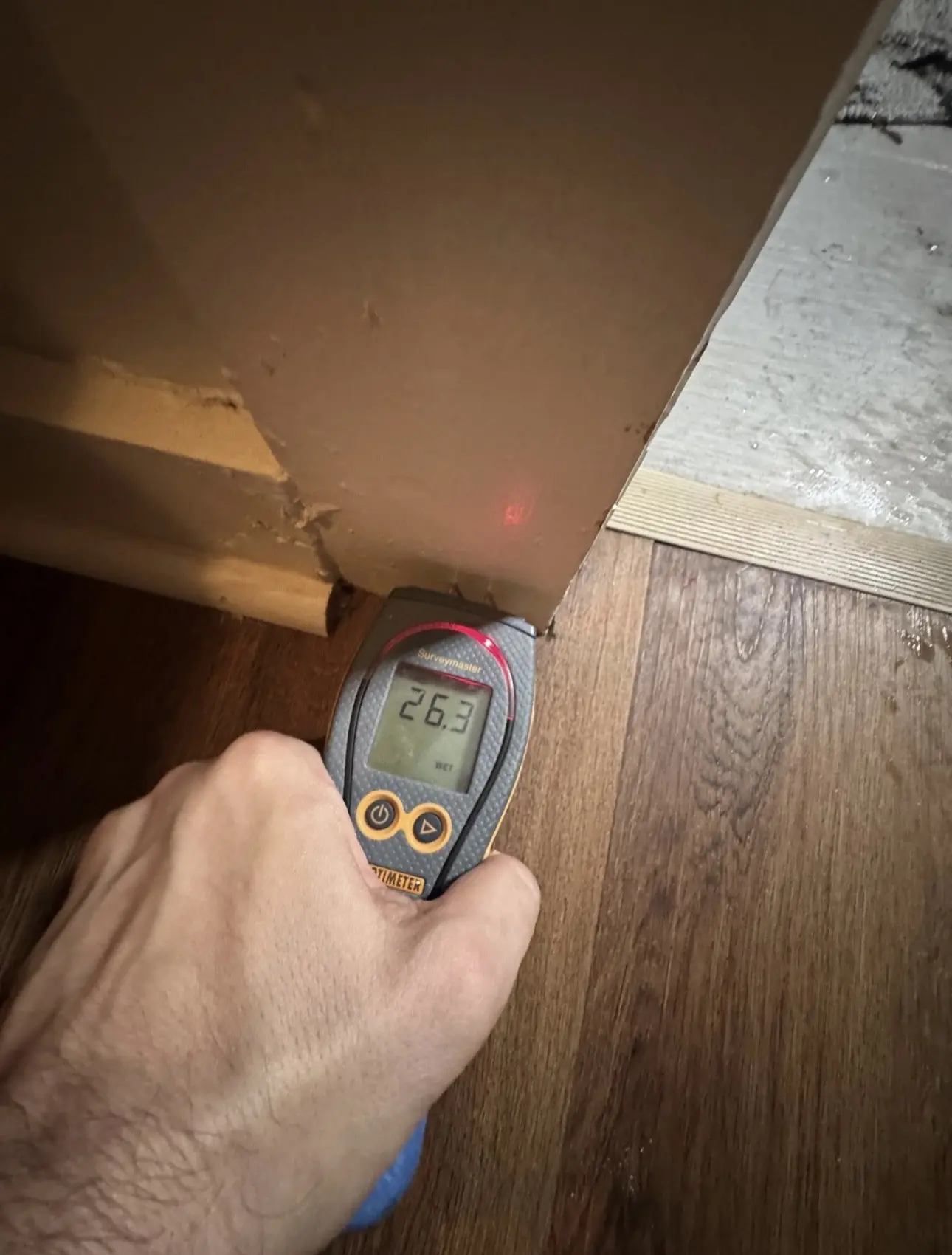
- Moisture-meter readings
Practical findings and next steps
TMG focuses on observations that lead to action: stop a moisture source, seal a pathway, correct drainage, improve humidity control or involve an HVAC, plumbing or environmental specialist when needed.
Testing is not a substitute for investigation.
Air samples can be useful in specific situations, but results must be interpreted with the building conditions. A thorough visual and moisture assessment often reveals more about what should be corrected.
Start with a focused inspection.
For musty odors, visible staining or unexplained dampness, review TMG's New Orleans mold and moisture inspection service.