Water damage does not stop at the visible stain.
Water can move below flooring, behind baseboards, through wall cavities and into insulation. TMG starts by identifying the source, checking accessible materials and mapping the affected area before deciding what should be dried or removed.
New Orleans water mitigation services
- Emergency water extraction
- Moisture mapping
- Thermal-imaging screening
- Controlled demolition
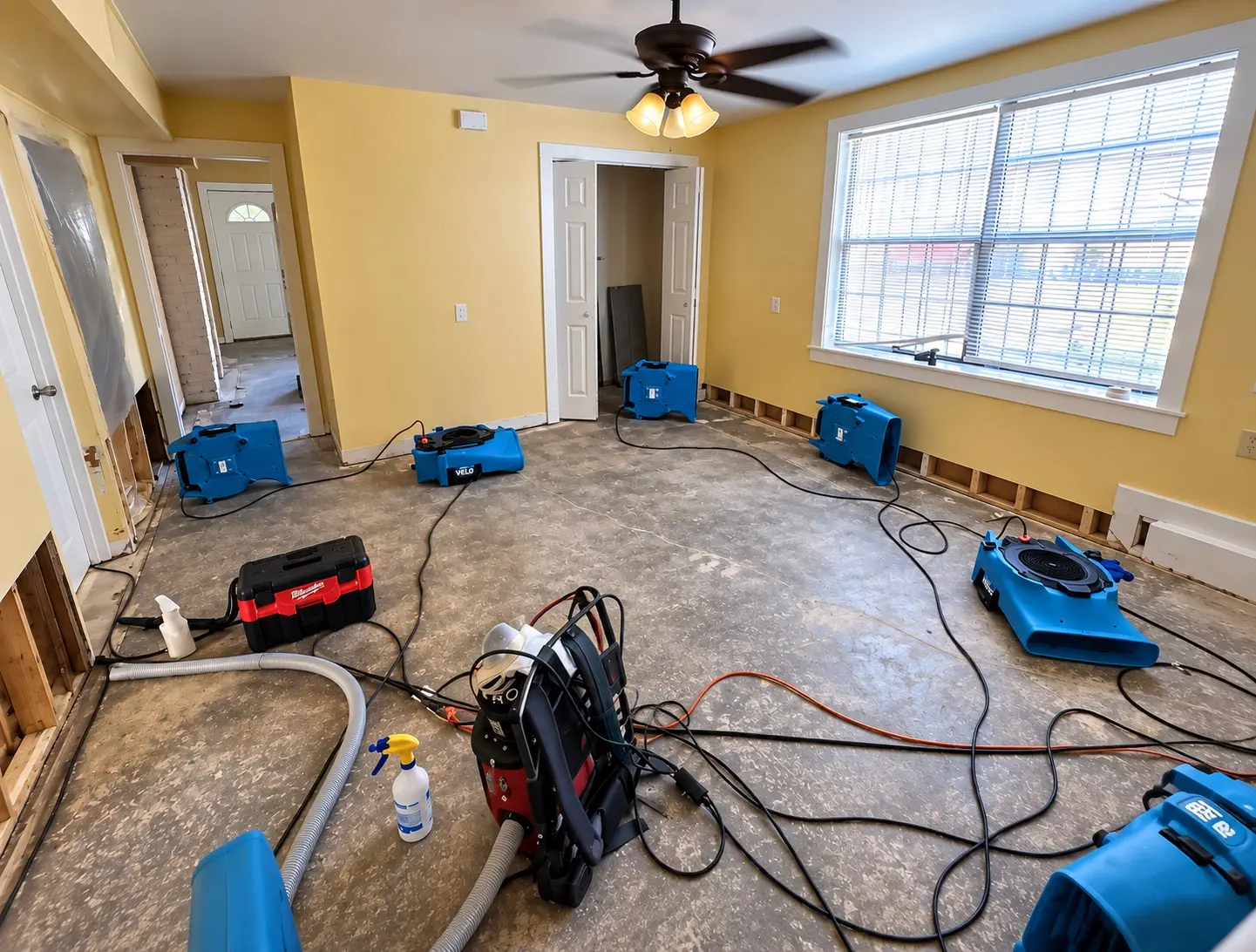
- Air movement and dehumidification
- Drying monitoring
- Surface and content protection
- Photo and moisture documentation
A scope based on the building—not assumptions.
New Orleans properties include raised homes, slab foundations, historic assemblies, additions and renovated spaces. Water can follow framing, flooring transitions and concealed pathways differently in each one. We use readings and field conditions to develop the scope instead of treating every loss the same.
Selective removal when it is justified.
Some assemblies can be dried in place. Others need to be opened because of contamination, trapped moisture, deterioration or a lack of drying access. TMG explains the reason for each recommended step before the work proceeds.
Documentation for owners and claims
TMG can document affected areas, drying equipment, moisture readings and necessary removal. When insurance is involved, those records help show what conditions were found and what work was performed. Coverage decisions remain with the carrier.
Related help
For a musty odor or an uncertain source, start with our mold and moisture inspection service. For the broader process, review our water damage mitigation service and hidden water damage guide.